

Popular Subjects
Discover the most sought-after fields of study and find your perfect academic path.

Business Management
Business Management is the study and practice of organizing, planning, and overseeing operations within organizations to achieve strategic goals efficiently. It combines leadership, decision-making, resource allocation, and analytical thinking to drive growth, productivity, and innovation. A degree in Business Management equips students with knowledge in finance, marketing, human resources, operations, strategy, and entrepreneurship. Students develop skills in problem-solving, communication, teamwork, and critical analysis, enabling them to lead organizations effectively. Business Management is vital across industries, helping companies navigate competitive markets, implement sustainable practices, and create value for stakeholders. Graduates can pursue careers in corporate management, consulting, finance, marketing, project management, and business development.
Biological Sciences
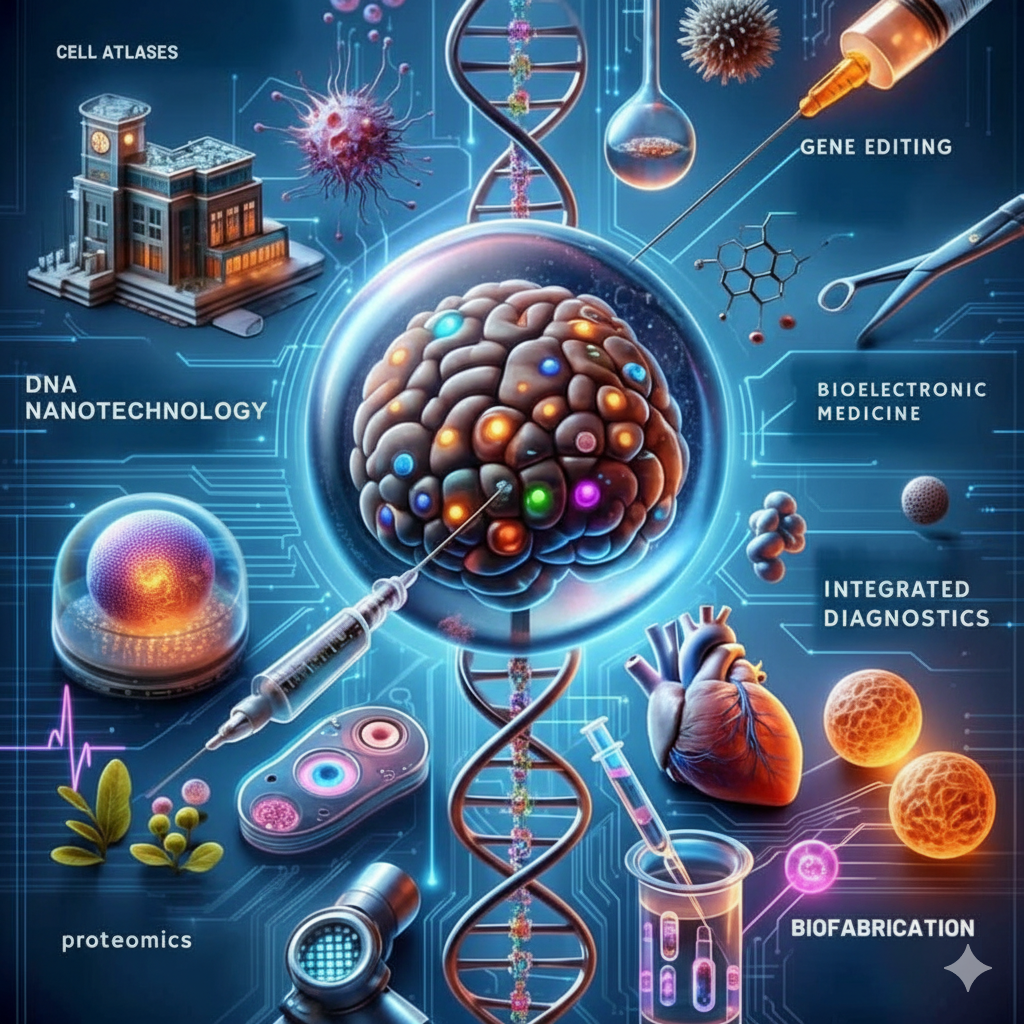
Biological Sciences is the study of living organisms and their interactions with each other and their environments. It encompasses a wide range of disciplines, including genetics, microbiology, ecology, physiology, molecular biology, and evolutionary biology. A degree in Biological Sciences provides students with a deep understanding of life processes at molecular, cellular, organismal, and ecological levels. It develops critical thinking, research skills, laboratory techniques, and data analysis capabilities. Biological Sciences is fundamental to addressing global challenges such as health, disease, food security, conservation, and environmental sustainability. Graduates can pursue careers in medicine, biotechnology, research, environmental management, public health, and education. This field fosters curiosity, analytical thinking, and an appreciation for the complexity and diversity of life on Earth.
Biochemistry
Biochemistry is the branch of science that explores the chemical processes and substances that occur within living organisms. It bridges biology and chemistry to understand how cells function, how biomolecules interact, and how life is sustained at a molecular level. A Biochemistry degree provides knowledge in molecular biology, genetics, enzymology, metabolism, and laboratory techniques. Students learn to analyze proteins, DNA, RNA, and other biomolecules, develop critical thinking, and conduct experimental research. Biochemistry plays a crucial role in medicine, pharmacology, biotechnology, agriculture, and environmental science. It helps in discovering new therapies, understanding diseases, and improving health outcomes, making it a cornerstone of modern life sciences.

Archaeology & Art History
Archaeology & Art History is the study of past human societies through their material remains, artistic achievements, and cultural artifacts. Archaeology focuses on uncovering, documenting, and analyzing physical evidence such as ruins, pottery, tools, and monuments, while Art History examines the development, meaning, and context of artistic expression across civilizations. A degree in this field equips students with skills in critical thinking, research, visual analysis, and preservation techniques. Students learn to interpret historical evidence, understand artistic traditions, and reconstruct cultural narratives. Careers include museum curation, heritage management, academic research, cultural tourism, and conservation. This discipline bridges history, art, and anthropology, helping us understand human creativity, cultural evolution, and the connections between past and present.

Anthropology
Anthropology is the scientific study of humans, their societies, cultures, and biological development across time. It examines what makes humans unique, how societies function, and how cultural, social, and environmental factors shape human behavior. An Anthropology degree provides insights into human evolution, cultural diversity, social structures, language, archaeology, and ethical research practices. Students learn to conduct fieldwork, analyze data, and interpret human behavior across different societies. Anthropology connects past and present, biology and culture, offering careers in research, cultural resource management, public policy, international development, education, and social services. It fosters empathy, critical thinking, and a deeper understanding of humanity in a global context.

Arts, Humanities & Social Science
Arts, Humanities & Social Science is the study of human culture, behavior, and society through critical thinking, creativity, and research. This multidisciplinary field explores history, literature, philosophy, sociology, anthropology, psychology, and political science to understand how people interact, communicate, and shape the world around them. A degree in this field equips students with analytical skills, cultural awareness, ethical reasoning, research methods, and effective communication. Graduates learn to interpret human experiences, assess societal challenges, and propose informed solutions. Careers in this area include roles in education, public policy, social work, journalism, international relations, and cultural management. This field encourages curiosity, empathy, and intellectual growth, allowing individuals to contribute meaningfully to society and engage with global issues in thoughtful and innovative ways.

Art & Design
Art & Design is the exploration and expression of creativity through visual, digital, and tactile forms. It is a discipline that blends imagination, technique, and communication to convey ideas, evoke emotions, and solve problems through aesthetic and functional solutions. An Art & Design degree provides students with a deep understanding of color theory, composition, visual storytelling, digital media, and traditional artistic techniques. Students learn to think critically, experiment with materials, and develop unique personal styles while mastering professional tools like graphic design software, illustration, and 3D modeling. Art & Design opens doors to careers in visual arts, animation, advertising, digital media, fashion, interior design, and more, allowing individuals to shape culture, inspire audiences, and transform spaces and experiences through creativity.

Architecture
Architecture is the art and science of designing buildings and physical spaces that shape the way people live, work, and interact. Since ancient civilizations, architecture has reflected culture, technology, and social values through the creation of homes, monuments, cities, and public spaces. An Architecture degree provides a strong foundation in design principles, construction techniques, structural systems, environmental sustainability, and urban planning. Students learn how to combine creativity with technical knowledge to design functional, safe, and aesthetically pleasing structures. The subject also develops skills in drawing, 3D modeling, critical thinking, and problem-solving. Architecture connects art with engineering, allowing professionals to transform ideas into real-world structures that improve communities and enhance the built environment.

Accounting
Accounting has played a vital role in the development of trade, business, and economic systems since the early stages of civilization. It is one of the most essential disciplines for managing financial activities and ensuring transparency in both public and private sectors. An Accounting degree provides a comprehensive understanding of financial reporting, auditing, taxation, budgeting, and business analysis. It helps students develop analytical thinking, problem-solving skills, and ethical decision-making abilities. By studying Accounting, students gain the knowledge required to evaluate financial performance, support strategic planning, and contribute to the sustainable growth of organisations and economies.